

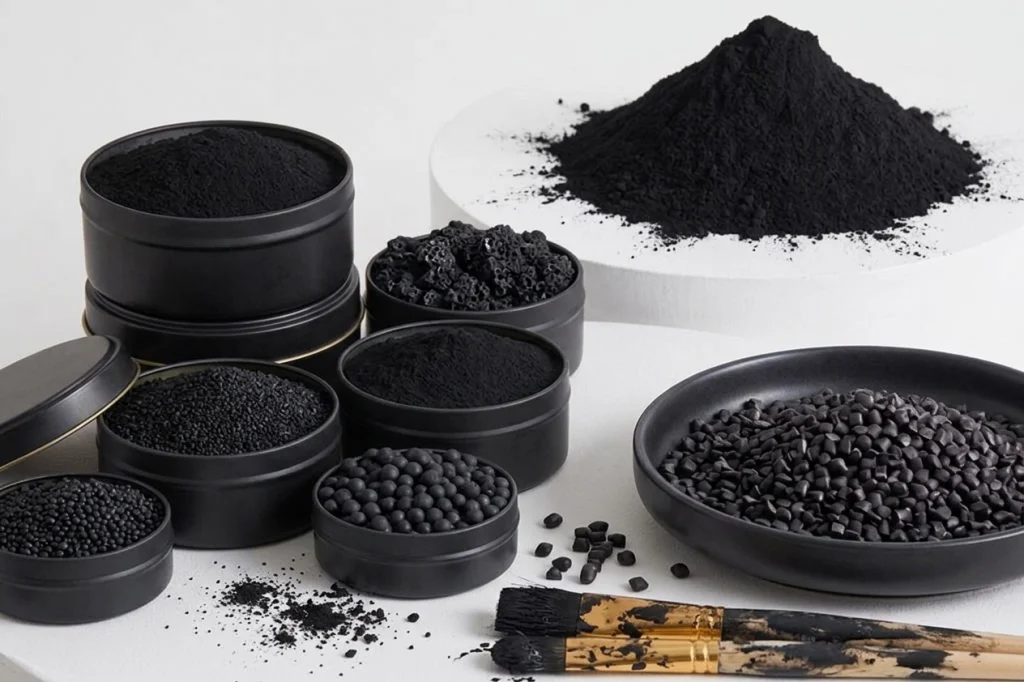
Carbon Black Price List 2026: Complete Guide for International Buyers and Importers
Carbon black is an important industrial raw material used in rubber, plastics, coatings, inks and specialty applications. For international buyers, finding an accurate Carbon Black Price List requires understanding technical specifications, ASTM grades, supply conditions and market factors rather than comparing only the price per metric ton.
The final purchasing price depends on several variables, including ASTM grade, iodine adsorption, DBP absorption, order volume, packaging type, origin and shipping terms. Buyers should also evaluate batch consistency, documentation and compatibility with their production requirements.
The ASTM classification system for rubber-grade carbon black describes how grades are designated and how selected material properties are used in classification. The actual specification should always be checked against the supplier’s current technical documentation.
Carbon Black Price List 2026: Quick Summary
Key points for importers comparing carbon black grades and preparing a bulk purchasing inquiry.
- Common rubber grades: N220, N330, N550 and N660, each with its own performance profile.
- Main applications: Tires, rubber products, plastics, coatings, inks and specialty materials.
- Important technical parameters: Iodine adsorption, DBP absorption, surface area, tint strength, ash and moisture.
- Main price factors: Grade, specification, quantity, origin, packaging, freight and agreed delivery terms.
- Documents to request: Technical Data Sheet (TDS), Certificate of Analysis (COA) and Safety Data Sheet (SDS), as applicable.
- Buyer recommendation: Request a quotation using the exact grade, application, quantity, destination and shipping terms.
Carbon Black Price List by ASTM Grade: N220, N330, N550 and N660
ASTM classification is widely used to identify rubber-grade carbon blacks. The grade designation helps buyers distinguish between different types of material, but it does not replace checking the actual product specification.
According to ASTM D1765, the classification uses a four-character nomenclature. The designation provides information related to the classification of rubber-grade carbon blacks; buyers should refer to the applicable active standard and supplier documentation when specifying a material.
For application context and general carbon black information, the International Carbon Black Association’s overview of carbon black uses describes applications that include reinforcement in rubber, pigmentation, UV stabilization and conductive uses.
N220 Carbon Black
A reinforcing rubber grade often selected for demanding rubber compounds where reinforcement and abrasion performance are important.
N330 Carbon Black
A widely used rubber grade selected for various tire, hose and general rubber applications that require a balance of properties.
N550 Carbon Black
A medium-reinforcing grade used in selected rubber compounds where processing behavior and compound properties must be balanced.
N660 Carbon Black
A lower-reinforcement grade used in selected industrial rubber products, depending on the required compound characteristics.
Carbon Black Grade Comparison Table
The table below reproduces indicative reference values from the supplied draft. They are not guaranteed ASTM limits or product specifications. Actual values vary by manufacturer, grade, applicable test method and product specification.
| ASTM Grade | Typical Application | Iodine Adsorption (mg/g) | DBP Absorption (ml/100g) | Main Buyer Consideration |
|---|---|---|---|---|
| N220 | Tire compounds and high-reinforcement rubber applications | Approximately 121* | Approximately 114* | Reinforcement and abrasion performance |
| N330 | Tires, hoses and general rubber products | Approximately 82* | Approximately 102* | Balance of performance and processing |
| N550 | Rubber compounds, extrusion and industrial products | Approximately 43* | Approximately 121* | Processing and compound characteristics |
| N660 | Seals, hoses and selected industrial rubber applications | Approximately 36* | Approximately 90* | Lower reinforcement and application-specific flexibility |
*Indicative values from the supplied article draft. Verify values against the producer’s current TDS, the relevant ASTM test methods and the specific grade before using them as procurement requirements.
N220: High-Reinforcement Rubber Grade
N220 is commonly associated with demanding rubber compounds that require substantial reinforcement. Buyers should review the proposed grade’s technical data and test the compound under representative manufacturing conditions.
N330: General-Purpose Rubber Grade
N330 is widely used in rubber manufacturing. Its suitability depends on the specific compound formulation, processing method and final product requirements.
N550: Processing and Compound Balance
N550 is used in selected rubber applications where a different reinforcement and processing profile is required compared with more highly reinforcing grades. Final suitability must be evaluated using the actual compound formulation.
N660: Lower-Reinforcement Applications
N660 may be considered for selected rubber products requiring a different balance of reinforcement and processing behavior. Always confirm suitability with the supplier and compound-testing team.
Key Factors That Influence Carbon Black Prices for Global Buyers
Carbon black pricing is influenced by technical, commercial and logistical factors. International buyers should review these elements before comparing supplier quotations.
1. Carbon Black Grade and Performance Requirements
Different grades are selected for different performance needs. The chosen material can affect reinforcement, processing behavior, dispersion and the characteristics of the final compound.
- Tire and rubber manufacturers may specify particular reinforcing grades.
- Rubber goods producers should match the grade to the required compound properties.
- Plastic, coating and ink applications may require pigment grades with suitable dispersion and tint characteristics.
- Choosing an unsuitable grade may increase costs through processing issues or inconsistent final-product performance.
2. Technical Specifications and Quality Parameters
Professional buyers should check the relevant technical information, including:
- Iodine adsorption number.
- DBP absorption value.
- Surface area and particle characteristics.
- Tint strength, where applicable.
- Ash and moisture content.
- Pellet properties and other grade-specific requirements.
These parameters help buyers evaluate whether a grade is appropriate for the intended compound. The ICBA technical and safety resources provide additional background for users handling and evaluating carbon black.
3. Order Quantity and Packaging
The order size, packaging format, loading method and purchasing schedule can affect the commercial offer. When requesting a quotation, specify the target volume and preferred packaging so that offers can be compared on a consistent basis.
4. Logistics and Delivery Terms
Freight, destination port, insurance where applicable, handling charges, customs requirements and the named delivery term all influence the final import cost. A price per metric ton should therefore be evaluated alongside the complete delivery conditions.
5. Documentation and Supplier Evaluation
Product documentation helps buyers evaluate conformity with purchasing specifications. Request available technical and quality documents, then confirm which parameters are guaranteed for the offered grade.
Carbon Black Price Reference Table (2026)
The following figures are indicative reference ranges included in the supplied draft. They are not confirmed current market quotes and are not an offer from Toseaye Pardis Sabz. Confirm current prices, origin, availability, quantity and delivery terms directly with suppliers before relying on these figures for a purchasing decision.
| Carbon Black Grade | Indicative Draft Price Range | Common Application |
|---|---|---|
| N220 | USD 1,200–1,700 / MT | High-reinforcement rubber applications |
| N330 | USD 1,100–1,600 / MT | Tires and general rubber products |
| N550 | USD 1,100–1,550 / MT | Rubber extrusion and industrial products |
| N660 | USD 1,000–1,450 / MT | Selected seals, hoses and flexible rubber applications |
MT means metric ton. Price ranges are provisional estimates from the supplied draft and should not be interpreted as confirmed offers. Actual quotations may differ due to grade, specification, origin, order quantity, packaging, freight and Incoterms.
How to Request a Current Carbon Black Price
- Specify the exact ASTM grade or technical equivalent required.
- State the required quantity and expected purchase frequency.
- Identify the destination country and port.
- Specify the preferred packaging and delivery term.
- Request the technical specification and applicable COA.
Import Volume and Shipping Conditions
For international buyers, final landed cost includes more than the product price. A complete purchasing assessment should consider:
Confirm the supplier’s minimum order and whether trial quantities are available.
Specify packaging type, net weight, loading plan and applicable handling requirements.
Identify the country, port and final delivery destination.
Confirm which logistics charges are included and which remain payable by the buyer.
Check the applicable import classification, documentation and duties with a qualified customs professional.
Clarify the named place or port and applicable Incoterms version in the written offer.
Documentation and Supplier Evaluation
Before importing carbon black, buyers should confirm the documents relevant to the intended grade, application and destination.
| Document | Purpose | Buyer Check |
|---|---|---|
| Technical Data Sheet (TDS) | Describes product properties and relevant specifications. | Check grade identity, technical parameters and revision date. |
| Certificate of Analysis (COA) | Reports specified test results for a batch or lot, where provided. | Check the batch reference, actual results and specified limits. |
| Safety Data Sheet (SDS) | Provides hazard, handling, storage and safety information. | Check product identity, current revision and applicable handling advice. |
| Packing Specification | Describes packaging format and shipment configuration. | Confirm package weight, packing type and loading arrangement. |
| Certificate of Origin | Confirms origin when required for the transaction. | Confirm destination-country requirements and issuer. |
| Commercial and Shipping Documents | Support trade, transportation and customs clearance. | Check consistency of product description, quantity and shipment details. |
Carbon Black Handling and Safety
Carbon black is a fine particulate material, and occupational dust exposure should be controlled according to the applicable safety documentation and workplace regulations. Buyers should review the supplied SDS and relevant handling procedures before storing, transferring or processing the material.
For practical health, safety and environmental information, refer to the International Carbon Black Association’s user’s guide and resources and the IARC monograph on carbon black, titanium dioxide and talc. Use the current SDS and applicable workplace requirements for operational decisions.
Before Requesting a Carbon Black Price Quotation
To receive a useful technical and commercial quotation, international buyers should prepare the following information before contacting a supplier.
Carbon Black RFQ Checklist
Include these details in your purchasing inquiry.
- Required grade: N220, N330, N550, N660 or a defined equivalent specification.
- Application: Rubber, tires, plastics, coatings, inks or another end use.
- Quantity: Required tonnage and expected purchasing schedule.
- Destination: Country, port and final delivery point.
- Packaging: Preferred bag, bulk or other available packing arrangement.
- Delivery basis: Requested FOB, CFR, CIF or another mutually agreed Incoterm.
- Technical documents: Required TDS, COA, SDS or other applicable records.
Providing complete information helps suppliers assess grade availability, technical suitability and the commercial conditions relevant to your order. The final offer should clearly state the exact product, quantity, currency, delivery term and quotation validity.
Carbon Black Supply from Toseaye Pardis Sabz
Toseaye Pardis Sabz Co., Ltd. serves industrial customers in the polymer and chemical raw materials sector. Buyers interested in carbon black can contact the company to discuss their required grade, application and technical documentation needs.
To help evaluate your inquiry, provide the relevant specifications or TDS of the product you require, together with your expected quantity and delivery destination.
- Required ASTM grade or technical specification.
- Application and intended production process.
- Quantity and anticipated order schedule.
- Destination country and preferred shipping term.
- Packaging and required technical documents.
Product availability, grade suitability, pricing, minimum order quantity and export terms should be confirmed in writing before any purchasing commitment is made.
Frequently Asked Questions About Carbon Black Prices
Answers to common questions from carbon black importers and industrial buyers.
What is the price of carbon black per ton?
Carbon black prices depend on the ASTM grade or specification, origin, order quantity, packaging and shipping conditions. Any indicative range should be verified with a current quotation for your destination and requested delivery terms.
Which carbon black grade is commonly used in rubber production?
N330 is widely used in rubber applications, while grades such as N220, N550 and N660 are selected for different performance and processing requirements. The most suitable grade depends on the final compound formulation and application.
What is the difference between N220, N330, N550 and N660?
These designations refer to different rubber-grade carbon black classifications. Their properties and performance profiles vary, including reinforcement, surface characteristics and structure. Check the applicable ASTM classification, technical data sheet and supplier test results before choosing a grade.
What information should buyers provide for a carbon black quotation?
Provide the required grade, application, quantity, destination country, packaging preference, delivery term and any required technical specifications. This information helps a supplier prepare a more relevant commercial offer.
Why do carbon black prices differ between suppliers?
Differences may reflect the grade, technical specifications, origin, production route, packaging, order size, logistics costs and contractual terms. Compare offers only after confirming that the products and delivery conditions are equivalent.
Which documents should I request before importing carbon black?
Request the applicable Technical Data Sheet (TDS), Certificate of Analysis (COA) and Safety Data Sheet (SDS). Depending on the transaction, you may also need packaging, origin, commercial and shipping documents.
How can I obtain the latest carbon black price list for 2026?
Contact a supplier for a current quotation and provide the exact grade, quantity, destination, packaging and requested shipping terms. Market reference ranges should not be treated as live offers unless supported by dated and verifiable pricing information.
Request a Carbon Black Price List and Export Quotation
Looking for N220, N330, N550 or N660 carbon black for industrial applications? Contact Toseaye Pardis Sabz to discuss your specifications, product documentation requirements and potential supply arrangements.
Request a Carbon Black QuotePhone: +98 910 317 2750
Email: Tech02@pardissabz.com
Website: pardissabz.com/en
All specifications, prices, product availability and delivery terms are subject to confirmation by the supplier.

