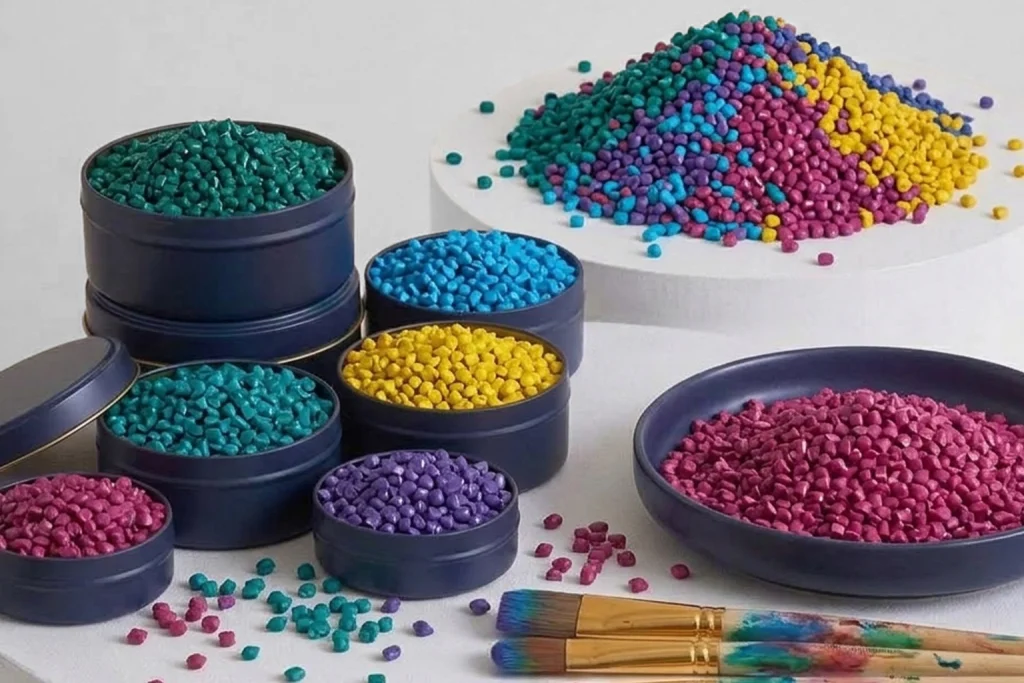
Masterbatch in Pakistan: A Buyer’s Guide to Choosing the Right Supplier
Looking for a reliable masterbatch supplier in Pakistan for your plastic manufacturing business? The right supplier should help you identify suitable grades, understand technical requirements and evaluate commercial terms before placing an order.
Whether you manufacture plastic films, containers, molded products, pipes or other polymer-based goods, your choice of masterbatch can influence the final color, appearance and processing performance of your products. For an overview of global masterbatch product portfolios and solid color masterbatch solutions, review the published product information from established industry manufacturers. This guide explains the main masterbatch types, what to check when comparing suppliers, and how to request a quotation for supply to Pakistan.
Quick Summary: Masterbatch in Pakistan
Use this checklist to evaluate masterbatch options and prepare a more accurate purchasing inquiry.
- Choose the right grade: Identify whether you need color, white, black or additive masterbatch.
- Check material compatibility: Confirm that the carrier polymer is suitable for your base resin and production process.
- Review technical information: Ask for applicable product specifications and available test documentation.
- Compare total costs: Consider dosage, order quantity, packaging, freight and delivery terms.
- Confirm export arrangements: Check product availability, shipment feasibility and import documentation for Pakistan before ordering.
What Is Masterbatch and Why Does It Matter?
Masterbatch is a concentrated mixture of pigments, additives or other functional ingredients dispersed in a carrier polymer. It is commonly supplied in granule form and incorporated into a base polymer during plastic processing.
Manufacturers use masterbatch to achieve a desired color or introduce specific properties without directly handling concentrated pigments or additives in every production batch. Different producers publish their approaches to formulation and color development, including custom color masterbatch solutions designed around polymer and application requirements.
Depending on the formulation and its intended use, masterbatch can help manufacturers:
- Achieve a defined color and consistent visual appearance.
- Introduce selected functional additives into a polymer formulation.
- Control ingredient dosing during production.
- Improve the repeatability of a process when material compatibility and operating conditions are properly controlled.
- Reduce direct handling of concentrated ingredients in suitable applications.
Types of Masterbatch for Plastic Manufacturing
Before contacting a masterbatch supplier in Pakistan, identify the function you need. The main categories differ in their formulation, intended use and selection criteria. For examples of color concentrate technology, buyers can review technical and product descriptions published by established producers.
Masterbatch Types at a Glance
Four common categories to consider when preparing your product specification.
Color Masterbatch
Used to achieve a specified color in plastic products. Selection depends on shade, color strength, dispersion and compatibility.
White Masterbatch
Used when white coloration and a defined level of opacity or visual appearance are required.
Black Masterbatch
Used to produce black plastic products. Other performance requirements, including UV resistance, depend on the grade.
Additive Masterbatch
Used to introduce selected functional properties according to the application and formulation.
| Masterbatch Type | Main Purpose | What to Check |
|---|---|---|
| Color Masterbatch | Plastic coloration | Target shade, dispersion, carrier compatibility and heat stability |
| White Masterbatch | White coloration and opacity | Titanium dioxide content, dispersion and required opacity |
| Black Masterbatch | Black coloration | Carbon black content, dispersion and specified UV performance |
| Additive Masterbatch | Specific functional properties | Required function, dosage, polymer compatibility and end use |
Color Masterbatch
Color masterbatch is used to achieve a defined color in plastic films, packaging, household items and other polymer products. For accurate color matching, share a physical color sample or an agreed color reference with the supplier. Some producers also describe their custom color matching services and the importance of testing color concentrates for the intended process.
Important factors include:
- Target shade or color standard.
- Base polymer and processing temperature.
- Required color strength and dosage.
- Dispersion and the appearance of the finished product.
- Any required light, heat or weathering performance.
White Masterbatch
White masterbatch is used where a plastic product requires white coloration, opacity or a specific appearance. Relevant selection criteria can include titanium dioxide content, carrier compatibility, dispersion and the opacity needed for the final product. Review a manufacturer’s published white masterbatch product range as an example of the category and its industrial applications.
A higher concentration does not automatically guarantee the best result. Formulation, dosage, base resin and processing conditions all influence final performance.
Black Masterbatch
Black masterbatch is used to produce black plastic products. Depending on the application, the buyer may also have requirements related to UV exposure, outdoor durability, surface appearance or dispersion. Technical overviews of black masterbatch formulations explain why color strength, dispersion and performance specifications should be evaluated together.
You can also examine information about black masterbatch for thermoplastic applications when comparing the characteristics that manufacturers describe for different end uses.
Do not assume that every black masterbatch provides the same UV protection. State the intended application and ask the supplier to confirm the relevant grade specifications and available test evidence.
Additive Masterbatch
Additive masterbatch introduces a specific function into a polymer formulation. Depending on the supplier’s actual product range, examples may include slip, anti-block, antistatic or UV-stabilizing grades. Manufacturers such as specialist additive and white masterbatch producers publish information about the types of functions available for plastic processing.
Additional technical information about functional additive formulations can help buyers understand why the intended polymer, dosage and production process should be considered when evaluating a grade. Industry examples of functional masterbatch solutions also illustrate the variety of application-specific options available.
The appropriate grade depends on the required function, polymer, processing conditions and end use. If the product is intended for food-contact packaging or another regulated application, confirm the applicable documentation for that particular grade and use.
Finding the Right Masterbatch Supplier in Pakistan
Selecting a supplier involves more than comparing prices. A suitable supplier should be able to discuss product specifications, technical compatibility, quality evaluation and commercial terms. When researching the market, published product portfolios from masterbatch producers with color and additive ranges can serve as a reference for the different types of products buyers may need.
Confirm suitability for your base polymer, such as PE, PP or another resin used in your production line.
Identify whether the application requires color, white, black or additive masterbatch.
Request the applicable TDS, SDS where applicable, and batch-specific COA where available.
Confirm suitability for extrusion, injection molding, blow molding or your actual production process.
Evaluate color matching, dispersion, processing behavior and batch-to-batch consistency through suitable tests.
Compare order quantity, packaging, freight, lead time, delivery terms and price basis.
Confirm availability, shipment options and import documentation for Pakistan before placing the order.
For additional comparison, review customized color masterbatch and compound solutions, black, white, color and additive masterbatch portfolios, and masterbatch product categories for industrial applications. These resources can help you frame technical questions; they do not replace evaluation of a specific grade for your production conditions.
You can also look at the product and technical information published by custom masterbatch and thermoplastic compound manufacturers to understand the importance of formulation, application requirements and technical support.
| Evaluation Point | Question to Ask | Why It Matters |
|---|---|---|
| Product range | Which grades are available for my application? | Confirms whether the supplier can meet your requirements. |
| Technical support | Can the grade be evaluated for my polymer and process? | Helps identify compatibility and processing risks. |
| Documentation | Which product documents and batch records are available? | Supports technical evaluation and purchasing decisions. |
| Sample testing | Can we test a sample before a bulk order? | Allows evaluation under actual production conditions. |
| Export terms | What are the delivery terms and shipment arrangements? | Clarifies costs, lead time and responsibilities. |
Masterbatch Applications in Pakistan
The right masterbatch depends on the plastic product being manufactured and its processing requirements. For example, information from packaging, fiber and specialty masterbatch providers can help buyers understand why a grade is often selected for a specific polymer and application rather than for color alone.
| Application | Information to Share |
|---|---|
| Plastic films and flexible packaging | Polymer, film thickness, target shade, extrusion conditions and appearance. |
| Injection-molded products | Resin grade, processing parameters, required color and surface finish. |
| Blow-molded containers | Base polymer, wall appearance, processing temperature, shade and opacity. |
| Pipes and profiles | Polymer type, production method, color and outdoor durability requirements. |
| Agricultural plastic products | Polymer, intended exposure, required color and UV-performance specification. |
| Household and consumer products | Target color, surface finish, production process and intended use. |
For agricultural and outdoor plastic applications, see the published masterbatch applications and product information from a specialist manufacturer. You can also consult the global portfolio of color and additive masterbatch solutions for examples of product categories serving different plastic markets.
These are application examples, not a guarantee that one grade will work in every product. Confirm suitability using the relevant specifications and, where practical, a production trial.
What Determines Masterbatch Price in Pakistan?
The masterbatch price in Pakistan depends on the type of masterbatch, its formulation, order quantity and commercial delivery terms. There is no single price that applies to every grade.
Key Factors Affecting Price
- Masterbatch type: Different colorants and functional additives have different formulation and performance requirements.
- Concentration: Pigment or additive loading can significantly affect cost.
- Carrier polymer: The carrier and its compatibility with the base resin influence the material formulation.
- Color requirements: Custom shades or demanding specifications may require additional formulation work and testing.
- Order quantity: Volume, packaging and order frequency may affect the commercial offer.
- Freight and delivery: Shipping, insurance where applicable, delivery terms, duties and other import-related costs affect landed cost.
How to Compare Supplier Quotations
Comparing quotations for equivalent specifications gives a more useful picture than comparing the price per kilogram alone.
- Confirm the exact grade, technical specification and application.
- Compare the proposed dosage or let-down ratio.
- Check the quantity, packaging and currency basis.
- Clarify freight, insurance and delivery terms.
- Confirm lead time and applicable documentation.
- Calculate the expected total landed cost using verified charges.
How to Request a Masterbatch Quotation for Pakistan
A complete inquiry helps a supplier determine whether a suitable grade is available and prepare a more relevant quotation. Share the following information when requesting a price.
Step 1: Specify Your Base Polymer
Identify whether you use PE, PP, PET, ABS or another polymer. Include the specific resin grade where available.
Step 2: Identify the Required Masterbatch
State whether you need color, white, black or additive masterbatch. For a custom color, provide a physical sample or an agreed color reference.
Step 3: Explain Your Production Process
Specify whether you use film extrusion, injection molding, blow molding, pipe extrusion, fiber production or another process.
Step 4: Share Technical Requirements
Provide the target color, application, processing temperature, proposed dosage and any required performance tests. If you are replacing an existing supplier, include the current specification where possible.
Step 5: Provide Order and Delivery Details
State your estimated order quantity, packaging preference and destination in Pakistan. Explain whether the inquiry concerns a trial order or recurring supply.
Before contacting potential suppliers, you may review the published additive, UV and other masterbatch categories to help refine the terminology and product requirements in your inquiry. Always ask the supplier to confirm current availability and the suitability of any specific grade for your application.
Step 6: Review and Test the Proposed Grade
Review the quotation and available technical documents. Where practical, test the proposed material under representative production conditions before committing to a larger order.
Quotation Checklist
Prepare these details before contacting your supplier.
- Base polymer and resin grade.
- Required masterbatch type and target color or function.
- Production process and final product application.
- Technical specifications and required documents.
- Estimated order quantity and packaging preference.
- Delivery destination in Pakistan and required delivery terms.
Masterbatch Supply for Pakistan: Contact Toseaye Pardis Sabz
Toseaye Pardis Sabz works with masterbatches and polymer compounds for industrial applications. For buyers searching for a masterbatch supplier for Pakistan, the next step is to discuss the required grade, technical specification and export-supply requirements directly with the company.
To help evaluate your request, prepare the following information:
- Required masterbatch type and base polymer.
- Final product application and processing method.
- Target color or technical specification, if applicable.
- Estimated order quantity and expected purchasing frequency.
- Delivery destination in Pakistan.
- Required technical documents or performance criteria.
Product availability, grade suitability, sample support, minimum order quantity, lead time, shipment feasibility and export documentation should be confirmed directly before an order is finalized.
Frequently Asked Questions About Masterbatch in Pakistan
Answers to common questions about choosing a supplier, comparing quotations and purchasing masterbatch for plastic production.
Where can I find a masterbatch supplier in Pakistan?
Compare local suppliers and international exporters based on product range, technical documentation, polymer compatibility, sample support and delivery arrangements. Toseaye Pardis Sabz works with masterbatches and polymer compounds for industrial customers. Contact the team to discuss supply options for your requirements in Pakistan.
What types of masterbatch are used in plastic manufacturing?
Common categories include color, white, black and additive masterbatch. Color grades provide coloration, white grades help achieve whiteness and opacity, black grades provide black coloration, and additive grades introduce specified functional properties. The correct choice depends on the polymer and production process.
What is the masterbatch price in Pakistan?
Prices depend on formulation, colorant or additive concentration, carrier polymer, quantity, packaging and delivery terms. Request quotations for equivalent specifications and compare dosage, freight and applicable import charges rather than price per kilogram alone.
Can I order custom color masterbatch for PE or PP?
Custom color requirements can be evaluated according to the base polymer, target shade and processing conditions. Share a physical sample or color reference, resin type, application and production details so the supplier can assess suitable options.
Which documents should I request from a masterbatch supplier?
Request the applicable Technical Data Sheet (TDS), Safety Data Sheet (SDS, where applicable) and batch-specific Certificate of Analysis (COA), where available. Regulated applications may require additional documents or tests for the specific end use.
Can an international supplier ship masterbatch to Pakistan?
International supply may be possible, depending on product availability, destination coverage, shipping arrangements, lead time and applicable import requirements. Confirm shipment feasibility, delivery terms and required documents before placing an order.
How can I reduce color variation between masterbatch batches?
Use an agreed color reference, confirm compatibility between the carrier and base polymer, control dosage and processing conditions, and evaluate trial samples consistently. For recurring orders, establish appropriate quality criteria and review relevant batch documentation.
Looking for a Masterbatch Supplier for Pakistan?
Discuss your masterbatch requirements with Toseaye Pardis Sabz. Share your product specifications, application and estimated quantity to enquire about suitable grades and export-supply arrangements.
Contact Toseaye Pardis SabzProduct availability, technical suitability and commercial terms are subject to confirmation by the supplier.
